

Constantia Kloof
Visual Testing Level 2 Constantia Kloof
R12 000,00
Visual Testing (VT), also known as visual inspection, is the foundation of Non-Destructive Testing. This essential method involves direct visual examination.
What is Visual Testing?
Visual Testing (VT), also known as Visual Inspection, is the oldest and most widely used non-destructive testing (NDT) method. It involves direct or indirect observation of a component’s surface using the human eye (aided or unaided) or optical instruments to detect surface discontinuities, defects, corrosion, misalignment or weld imperfections without damaging the part.
How It Works:
- Illumination
- Access & Preparation
- Observation
- Evaluation
Applications:
- Pre-weld & In-process: Fit-up, root pass, interpass cleaning.
- Post-weld: Final weld appearance, cap profile.
- In-service: Corrosion under insulation (CUI), erosion, fatigue cracks.
- General: Assembly checks, surface finish, coating integrity.
- Industries: Oil & gas, power, aerospace, construction, marine.
Advantages:
- Fast, low-cost, no equipment needed for basic VT.
About
PCN Level 1 & 2
This course equips participants with a solid understanding of VT theory and its practical application on welds, castings & forgings (multi-sector) preparing and qualifying them as PCN Level I or II in Visual Testing.
PCN Level 3
This guidance course targets the PCN Level 3 requirements for Visual Testing practitioners. Its primary goal is to familiarise candidates with the examination scope and required knowledge level. It helps identify weaker subject areas and provides advice on any additional training needed.
Qualification
Training Days
- Level 1 & 2 combined: 5 days
- Level 3: 3 days
Experience
- Level 1 & 2 combined: 60 days
- Level 3: 240 days
Note: Experience may be acquired either prior to (for Level 1 and 2 entry only) or following success in the qualification examination. However, the chances of success in a PCN examination may be significantly reduced if candidates have little or no current experience in the application of the NDT method in the sector concerned.
Outcomes
PCN Level 2
Upon completion, the candidate shall be able to:
- Master Visual Testing Theory & Standards
- Select & Use Advanced Visual Aids Independently
- Conduct Full Pre-Weld, In-Process & Post-Weld VT
- Accurately Measure & Classify Imperfections
- Write & Follow VT Written Instructions
- Produce Professional Inspection Reports
- Perform Practical Examination
PCN Level 3
Upon completion, the candidate shall be able to:
- Master VT Theory, Optics & Human Factors
- Design & Qualify VT Procedures for Critical Applications
- Supervise, Train & Certify Level 1&2 Personnel
- Integrate VT with Other NDT Methods
- Lead Quality Assurance & Code Compliance
- Apply Advanced & Automated Visual Systems
- Prepare for PCN Level 3 Examination
Documentation
- ID
- PSL 57-A Initial Examination application
- PSL 30- Log of Experience
- PSL 44-Vision Requirements
- CP-27 code of ethics
- PCN ID (wallet or e-certificate) -only for existing PCN certificate holders
- Proof of either holding PCN certification or successful completion of BINDT PCN Online Product Technology- cert with QR code
Note: Blank PSL and CP forms can be collected from ANDTC offices during course or downloaded from BINDT website.
Curriculum
| Course Dates | 7-14 April 2026, 20-24 July 2026, 26-30 Oct 2026 |
|---|
Related products
-
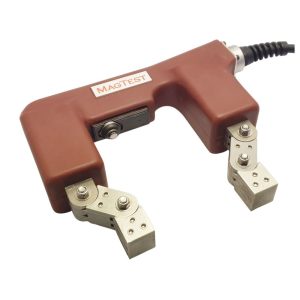 Constantia Kloof
Magnetic Particle Testing Level 1 Constantia Kloof
R11 500,00 Select options This product has multiple variants. The options may be chosen on the product page -
Constantia Kloof
Magnetic Particle Testing Level 1 & 2 Constantia Kloof
R23 500,00 Select options This product has multiple variants. The options may be chosen on the product page
